TIA Restoration Woodbridge Hanover Township
📞 862-421-8942
Property Damage Restoration Woodbridge Township, NJ
24/7 Emergency Response

Water Damage Restoration in Hanover Township, NJ — Owner-Led, Locally Crewed.

Hanover Township-based restoration with Morris County coverage. Water damage, fire and smoke, mold remediation, sewage cleanup — IICRC S500/S520/S700 protocols on every job.

📞 862-421-8942 Local team in Hanover Township 24/7 dispatch
Owner-Led Direct access during your project
Honest Cause-of-loss documented accurately
Transparent Line-item Xactimate pricing
Local Guide

Hanover Township Restoration — What You Need to Know

Hanover Township-based restoration with Morris County coverage. Water damage, fire and smoke, mold remediation, sewage cleanup — IICRC S500/S520/S700 protocols on every job.

Iicrc-standard Restoration Methodology for Hanover Township Property Owners

The Institute of Inspection, Cleaning and Restoration Certification (IICRC) publishes the industry standards that govern professional restoration work. S500 for water damage. S520 for mold remediation. S700 for fire and smoke. These standards are not legally required in NJ but they are what reputable restorers follow because they are the only protocols that produce work that holds up long-term.

Our Hanover Township crew holds the relevant IICRC certifications: WRT (Water Damage Restoration Technician), ASD (Applied Structural Drying), AMRT (Applied Microbial Remediation Technician), FSRT (Fire + Smoke Restoration Technician). Specific certification status of any technician on your job is available on request — we do not stretch certifications we do not actually hold.

Why this matters for your insurance claim: adjusters increasingly require that mitigation work be performed by IICRC-certified contractors following IICRC standards. Scopes written outside the standards may be denied or under-paid. Our scopes are written in Xactimate at carrier-standard pricing with line items tied to S500 / S520 / S700 protocols — adjusters approve them without back-and-forth because the line items match the documented conditions and the recognized standards.

Insurance Carriers, Claim Cycles, and What Speed Actually Costs

The NJ insurance market is dominated by a handful of carriers — NJM, Travelers, State Farm, Allstate, Liberty Mutual on the residential side; CNA, Hartford, Liberty Mutual, Travelers on the commercial side; Chubb, AIG Private Client, PURE on the high-end personal lines. Our scope formats and documentation packages match what those specific adjusters expect to see. That match is what produces fast claim cycles.

What speed actually costs the homeowner: nothing. Faster claim cycles benefit the homeowner directly because mitigation can proceed without waiting for adjuster approval at every stage, reconstruction starts sooner, displaced family members return home faster, and the loss-of-use coverage runs for a shorter period. Slower claim cycles — the kind generated by sloppy documentation or contractor-adjuster disagreements — extend the entire timeline at the homeowner's cost.

What speed actually costs the contractor: nothing either. Faster claim cycles let us redeploy crew capacity to the next job sooner. Adjusters who recognize our scopes call us first on overflow work because they know the back-and-forth will be minimal. The investment in documentation discipline pays for itself in claim cycle time — for our clients, our crew, and the carrier.

Restoration Service Across Hanover Township, East Hanover, Whippany, Cedar Knolls, and the Morris County Footprint

From our Hanover Township base we serve a tight radius across Morris County and the immediately surrounding municipalities. Standard arrival times: Hanover Township addresses inside the hour during normal traffic; East Hanover, Whippany, Cedar Knolls, and Florham Park typically reach in 20-40 minutes. Outside that footprint we will tell you honestly whether we can be there fast enough to be useful, or whether you should call somebody closer.

What our Morris County clients see most often: residential water losses (sump pump failures, supply line bursts, water heater leaks, dishwasher and washing machine appliance failures), storm-related events (nor'easter wind damage, tropical-storm-remnant flooding, frozen-pipe winter bursts), fire and smoke restoration (kitchen fires being the dominant pattern), sewer backup (combined-sewer territory in older parts of Morris County), and chronic-moisture mold problems usually discovered during home renovation or sale inspection.

The NJ housing stock varies widely — from 1920s plaster-walled bungalows to 1950s suburban tract construction to 2000s townhouse + condo development. Each calls for a slightly different restoration approach. Our crew works the Morris County housing patterns regularly enough that we recognize what's behind a wall before we open it.

Why Documentation Matters More Than People Think

The single biggest accelerator on a residential restoration claim is whether the scope arrives in a format the adjuster can settle without a callback. Sounds like a small thing. It isn't — it's the difference between a claim that closes in 2 weeks and one that drags through 3 rounds of supplements over 3 months.

Our standard documentation package on every Hanover Township job: photos of every wet surface before equipment goes down, moisture readings logged on a building diagram (so the adjuster sees WHERE the readings were taken, not just the numbers), Xactimate scope at carrier-standard pricing for the NJ market with line items tied to IICRC S500 protocols, equipment runtime logs (air movers + dehumidifiers, hours each), final clearance moisture readings showing every wet substrate returned to baseline.

This documentation is what makes the difference between scopes that close cleanly and scopes that get challenged. Adjusters who see clean documentation regularly come to recognize the source and approve faster. Adjusters who see vague or incomplete scopes push back, request supplements, and slow the entire project. We invested in the documentation discipline because the carrier relationship is what determines whether we can keep doing this work at scale — short-cuts on documentation hurt the claim AND the next claim AND the one after.

Water Damage, Fire Restoration, Mold Remediation, and Sewage Cleanup in Hanover Township, Nj

Our Hanover Township crew handles the full property restoration scope: water damage from pipe failures and storm events, fire and smoke damage with full content cleaning and HVAC decontamination, mold remediation per IICRC S520, sewage cleanup with full Cat-3 protocol, and the reconstruction work that follows each. Same crew handles mitigation through reconstruction — no handoff to a separate contractor mid-project.

Most calls fall into one of these patterns: residential water loss from a pipe burst or appliance failure (most common), storm-related water intrusion through a damaged building envelope, sewer backup in a basement (combined-sewer territory in older NJ towns), kitchen or chimney fire smoke damage, and chronic-moisture mold growth that's been building behind walls for months. Each has its own protocol, its own equipment requirements, its own insurance treatment. We are equipped for all of them on every dispatch.

For multi-unit properties — condos, townhouses, commercial — we add the coordination layer: per-unit Xactimate scopes, building-management communication, COIs on file, after-hours noise scheduling. For single-family residential we keep it simple: clear scope, daily updates, single contract from first call to final walkthrough.

Emergency Restoration

Iicrc-standard Restoration for Hanover Township Properties.

Water Damage Restoration

24/7

Active water damage in Hanover Township? We extract, dry, document, and rebuild — one accountable crew, one Xactimate scope, no handoff to a separate contractor.

  • 24/7 emergency dispatch
  • Truck-mounted extraction
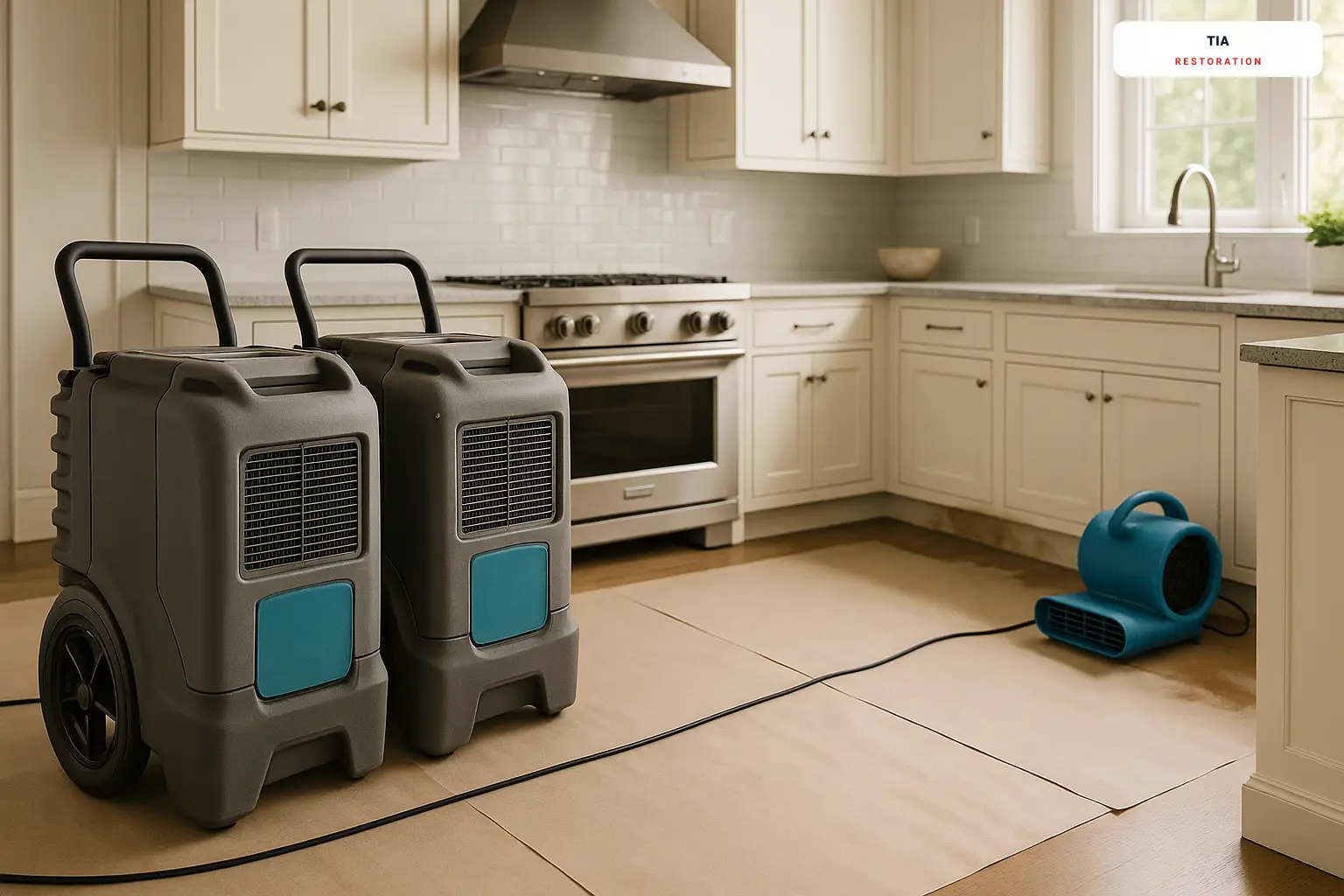
  • Industrial drying equipment
Learn more

Fire Damage Restoration

24/7

Soot removal, smoke odor mitigation, structural cleaning, and full reconstruction after fire events.

  • Soot + smoke odor removal
  • HVAC decontamination
  • Pack-out + content cleaning
Learn more

Storm Damage Restoration

24/7

Storm response across Morris County — tarping, board-up, wind-driven water extraction, and the rebuild work that follows each named event.

  • Emergency board-up + tarping
  • Wind-driven rain water extraction
  • Roof + envelope repair
Learn more

Mold Remediation

IICRC S520 mold remediation in Hanover Township — full containment, HEPA filtration, source removal, and post-clearance verification.

  • IICRC S520 protocol
  • Negative-air containment
  • HEPA filtration
Learn more

Sewage Cleanup

24/7

IICRC S500 Category-3 protocol for sewage backup events — full PPE, porous-material removal, decontamination.

  • IICRC S500 Cat-3 protocol
  • Full Tyvek + HEPA respirator PPE
  • Porous-material removal to flood line
Learn more

Reconstruction

The rebuild is where most restoration jobs slip schedule. Same-crew model means no waiting on a separate contractor to fit you in.

  • Drywall replacement + finish
  • Hardwood, LVP, tile, carpet flooring
  • Cabinetry + trim work
Learn more
24/7 Emergency

Property loss in Hanover Township right now? Crew dispatched in minutes.

We dispatch a tech 24/7 across the Hanover Township metro. Average on-site time is under an hour.

Call 862-421-8942
The difference

Why Customers Choose Us

Real reasons. No invented stats, no manufactured awards.

  • 01

    Carrier-Recognized Scopes

    NJM, Travelers, State Farm, Allstate, Liberty Mutual, Chubb — our scope formats match what their adjusters expect. Faster claim cycles, fewer callbacks, less friction between us and the adjuster paying for the work.

  • 02

    No Storm-Chase Tactics

    No unsolicited door-knocking after weather events. No Assignment of Benefits paperwork. No predatory "insurance pays — no cost to you" pitches. The work speaks for itself.

  • 03

    Reconstruction Done Right

    Drywall, flooring, paint, cabinetry, trim — handled by the same crew that did the dry-out. Specialty trades (plaster, hardwood, custom millwork) coordinated by us. You do not manage five sub-contractors.

Process

How It Works

  1. 01

    You Call

    A real person answers 24/7. We get the address, the situation, what equipment to load. Two minutes max on the call.

  2. 02

    We Roll

    Truck heads out within minutes for active losses. Standard target is on-site within 60 minutes anywhere in our Hanover Township footprint.

  3. 03

    Stop the Damage

    Water out, contaminated material removed, drying gear deployed, affected areas sealed off. The first 24 hours decide whether the loss stays small.

  4. 04

    Dry It Right

    Air movers + dehumidifiers run for 3-5 days. We log moisture readings daily, reposition equipment until every wet substrate hits the dry standard.

  5. 05

    Put It Back

    Same crew that pulled out the wet drywall puts the new drywall back. One contract from first call to final walk-through.

Service Area

Serving Morris County

Our Hanover Township dispatch covers a tight radius across Morris County. The compact service area is intentional — restoration work scales with response time, and minutes save material. East Hanover, Whippany, and Cedar Knolls all reach inside 30 minutes during normal traffic.

Counties Covered

  • Morris County, NJ

Cities We Service

Each Morris city below opens a local page with arrival times from our Hanover Township base and the loss patterns we handle most often in that municipality.

Not sure if you're in our area? Call 862-421-8942 and we'll tell you in 30 seconds.
FAQ

Frequently Asked Questions

If you don't see your question, just call or message us.

What should I do in the first hour of a water emergency? +

Shut off the water at the main if you can locate the source. Kill power to the affected area at the breaker if water is reaching outlets. Move what you can save away from the cascade path. Photograph the loss in its current state for insurance. Then call us — we are mobilizing while you are still on the phone.

Does insurance cover sewer backup? +

Standard homeowners insurance does NOT cover sewer backup. The fix is a sewer/water backup endorsement on your policy, typically $50-150/year. Coverage is usually $5,000-$25,000 depending on the limit you select. If you have not added the endorsement, the cleanup is out-of-pocket. Add it now to protect against future events.

How do you remove smoke odor after a fire? +

Smoke odor lives in porous materials at the molecular level — air freshener does not work. We use hydroxyl generators (safe for occupied spaces, breaks down VOCs over 3-7 days), ozone treatment (faster, requires evacuation), thermal fogging, and source removal for materials that cannot be deodorized. Air quality testing verifies odor levels return to baseline before reconstruction.

What is a backwater valve and do I need one? +

A backwater valve is a one-way valve installed in your main lateral drain that closes if sewer pressure tries to push water back into your basement. Cost is $1,500-$3,500 installed. For Hanover Township properties on combined sewer or older municipal systems, it is the single most effective sewer-backup prevention measure. We can refer to qualified plumbers if you want one installed.

How long does a fire restoration job typically take? +

A small contained fire with smoke damage but no structural rebuild: 2-4 weeks. A significant fire requiring partial structural reconstruction: 6-12 weeks. A total loss requiring full rebuild: 4-9 months. The timeline depends on scope, material lead times, and insurance approval cycle. We give a realistic week-by-week schedule at the start.

Can I clean up the water myself before you arrive? +

You can extract surface water with a wet/dry vacuum and start moving content away from the cascade path — those help. Do not lift wet drywall (it crumbles and makes cleanup harder), do not run heaters trying to dry it yourself (you drive moisture deeper into materials), and do not throw damaged contents away before we document for insurance. The 30-60 minutes between your call and our arrival are worth using for documentation, not partial demo.

What is the difference between mitigation and reconstruction? +

Mitigation is the emergency phase — stopping the loss, extracting water, drying the structure, removing damaged material. Reconstruction is the rebuild — replacing drywall, installing flooring, painting, finishing. Many restorers only do mitigation and hand the rebuild to a separate general contractor, which often creates scope-coordination problems. We do both as one contract so the rebuild matches what was scoped during mitigation.

Call Now • Hanover Township

Need a Restoration Crew in Hanover Township? Call a Live Dispatcher Right Now.

One phone call gets a truck rolling. Real Hanover Township team, real local response time, no automated phone tree. We'll be on site fast.

📞 Tap To Call 862-421-8942

24/7 Emergency Dispatch

📞 Call 862-421-8942